
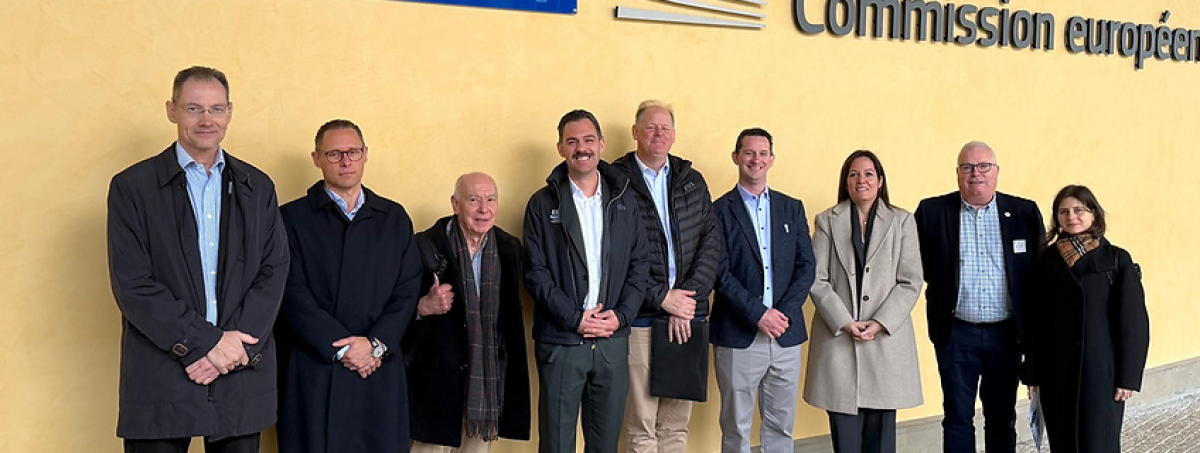
The Irish Marine Federation (IMF) has met Irish Members of the European Parliament, European Commission officials and industry representatives in Brussels to raise Ireland’s leisure marine priorities, according to Afloat, the Irish sailing and boating magazine, a visit that matters to association and institute professionals as a national trade body uses a European federation’s event to reach EU policymakers.
Afloat reported that the meetings took place during European Boating Industry’s Public Affairs Day, with IMF delegates Paal Janson, chairman Crónán O’Donnell and Gerry Salmon attending. The priorities were coastal access, VAT regulations, marina investment and nautical tourism.
The IMF is the national organisation representing both the commercial and leisure sectors of the marine industry in Ireland, according to its then president, Gerry Salmon, in a January 2024 statement.
European Boating Industry is the Brussels based association representing the European leisure marine industry, which welcomed the IMF as a full member in January 2024, according to its newsletter.
Afloat reported that the federation will keep working with European Boating Industry as EU policy develops.
The visit reflects how a small national association reaches EU policy through a European federation rather than directly.
Ireland’s ocean economy generated 8.39 billion euro in turnover in 2024 and supported more than 49,000 direct jobs, according to the Marine Institute’s Ocean Economy Report 2025, as published by the Marine Institute. Afloat has also reported that the IMF has raised concerns that parts of the leisure marine and marina sector risk being overlooked in marine spatial planning linked to offshore renewable energy, according to Afloat.
For the sector, membership of a European federation gives a national body access to EU institutions through shared meetings and a common agenda, which a single trade body of its size could not arrange alone. For the sector’s marina operators and boat businesses specifically, issues such as VAT and coastal access are decided partly at EU level, so representation in Brussels bears on local operating conditions.
Whether the federation’s Brussels contacts produce changes on VAT and marina investment, rather than stronger relationships alone, will indicate how far national trade bodies can influence EU policy across the sector.








.png)